
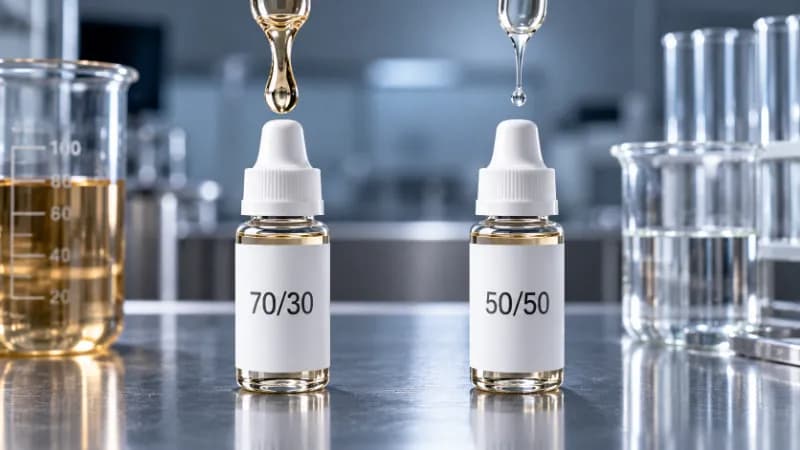
An Engineering Analysis of E-Liquid Viscosity: 70/30 vs 50/50
By Nick P • Fluid Dynamics & Thermal Dissipation
The Chemistry of PG and VG
Good day. When operating an internal combustion engine, one does not randomly pour hydraulic oil or kerosene into the fuel tank and express shock when the valvetrain fails. One inspects the engineering specifications, selects the correct octane and viscosity rating, and proceeds with mechanical harmony. An electronic atomiser operates under identical physical laws.
Every commercial e-liquid utilizes two foundational chemical carriers: Propylene Glycol (C3H8O2) and Vegetable Glycerin (C3H8O3). Propylene glycol is a synthetic organic compound characterised by low dynamic viscosity and high hygroscopic efficiency. It acts as an agile solvent for aromatic flavour compounds and delivers a defined mechanical throat impact. Vegetable glycerin is a carbohydrate trihydroxy alcohol derived from plant lipids; it exhibits elevated viscosity, a mild natural sweetness, and a high boiling point that produces dense particulate vapor condensation. Understanding these two compounds is the key to operating your vaping hardware reliably.
The interaction between these two distinct chemical diluents dictates how fluid migrates from an external reservoir into the cotton wicking matrix. In an unregulated or incorrectly calibrated setup, a fluid with excessive dynamic viscosity creates starvation at the heating element surface, leading directly to cotton scorch. Conversely, introducing a fluid of insufficient viscosity into a high-flow chamber results in involuntary flooding and mechanical gurgling. Precision in fluid specification is therefore mandatory.
Physical Implications of Ratio Adjustments
When you vary the ratio of PG to VG, you fundamentally alter the physical behaviour of the fluid inside the heating chamber:
- Capillary Wicking Velocity: High-PG fluids travel rapidly through densely packed cotton fibres, ensuring rapid saturation. High-VG fluids migrate slowly, requiring wider liquid ports to avoid dry heating.
- Sensory Impact (Throat Contraction): Propylene glycol creates a tactile contraction upon the pharyngeal mucosal membranes. Glycerin provides a smooth, non-reactive sensation.
- Thermal Vapor Density: Higher VG percentages condense into substantial aerosol clouds due to their chemical boiling properties. Higher PG formulations generate discreet, rapidly dissipating vapor.
- Aromatic Solvent Retention: Flavour compounds dissolve more readily in propylene glycol, yielding precise sensory clarity at lower operating wattages.
Furthermore, one must account for ambient operating temperatures. Propylene glycol retains stable kinematic viscosity across typical British autumnal and winter temperature swings. Vegetable glycerin, however, exhibits marked thermal thickening as temperatures drop below fifteen degrees Celsius. If you keep a high-VG fluid inside an unheated coat pocket, the wicking rate deteriorates significantly, whereas a balanced or high-PG formulation remains consistently fluid.
70/30 vs 50/50 Comparative Engineering Matrix
Let us examine the mechanical characteristics of these two prominent ratios in a structured comparative table:
Hardware Integration: Selecting the Appropriate Range
Selecting the appropriate liquid ratio requires inspecting the design of your heating coil. If you operate an older clearomiser or tank system that relies on compact cylindrical coils—such as the Aspire Nautilus 3 Tank or an Innokin Endura T20-S Kit—the capillary wicking channels are quite narrow. These devices require the fluid fluidity of 70/30 PG/VG. A thicker liquid will struggle to saturate the internal wick, resulting in scorched cotton.
Conversely, modern refillable pod systems—such as the Vaporesso Xros 4 Mini Pod Kit, the OXVA Xlim Pro 2 Kit, or the Voopoo Argus G2 Kit—utilize perforated mesh elements encased in broad cotton channels. These platforms are calibrated specifically for 50/50 VG/PG formulations. The balanced viscosity prevents liquid from flooding through the coil into the chimney, while the rapid thermal ramp-up cleanly vaporises both carrier compounds without spitting or leaking.
One must also evaluate the airflow delivery system. A restricted mouth-to-lung intake port generates significant negative pressure inside the atomiser chamber during inhalation. If high-PG liquid is subjected to massive suction in a wide-bore pod, it can overwhelm the intake channels. Matching coil resistance, airflow restriction, and base carrier viscosity creates the trifecta of mechanical efficiency.
The Hangsen Catalogue: Atom vs Atom 50 Mapping
Jacks E-Liquid maintains two clearly delineated platforms for Hangsen formulations, both presented in 10ml bottles starting from £2.00:
- Hangsen Atom Range (10ml 70/30 PG/VG): Specifically compounded for traditional mouth-to-lung kits and clearomisers requiring high-fluidity carriers and authentic throat impact.
- Hangsen Atom 50 Range (10ml 50/50 VG/PG): Formulated with a balanced 50/50 freebase carrier, designed for modern refillable pod systems.
This structural division allows consumers to bypass the confusion often caused by arbitrary labelling. Whether you prefer a robust tobacco profile like RY4 or a crisp cool option like Double Menthol, the mechanical baseline remains predictable across both ranges.
Viscosity & Hardware Compatibility Reference
- Coils Rated > 1.2 Ohm (Classic High Resistance): Hangsen Atom 70/30 PG/VG provides optimal capillary draw without dry wicking. Highly recommended for hardware such as the Aspire K3 Tank or Joyetech EVIO M Pro Pod Kit.
- Coils Rated 0.8 to 1.2 Ohm (Pod Mesh Cartridges): Hangsen Atom 50's balanced 50/50 formulation keeps flow velocity and aerosol delivery smooth. Ideal for devices such as the Innokin Endura V Pod Vape Kit or Vaporesso Xros 3 Pod Kit.
- Coils Rated < 0.6 Ohm (Sub-Ohm Clearomisers): Balanced 50/50 or high-VG liquids prevent internal chamber flooding and ensure stable vapor saturation.
Viscosity & Resistance Calibration Matrix
Specify your coil electrical resistance to establish proper fluid matching:
Quick coil-to-liquid pairing guide
Above 1.2Ω (Classic High-Resistance Clearomisers) → Hangsen Atom Range, 70/30 PG/VG — low viscosity prevents wicking starvation in compact intake ports while maintaining flavour clarity.
0.8–1.2Ω (Standard Resistance Mesh Pods) → Hangsen Atom 50 Range, 50/50 — balanced fluid properties ensure smooth wicking across mesh heating grids with zero throat harshness.
0.4–0.6Ω (Sub-Ohm & Restricted Direct-to-Lung) → 50/50 or High VG liquids — sub-ohm coils require higher viscous density to avoid atomizer chamber flooding and spitback.
What Is E-Liquid? PG, VG & Nicotine
E-liquid is the nicotine solution your vape heats into vapour. A plain-English guide to VG, PG, nicotine strengths...
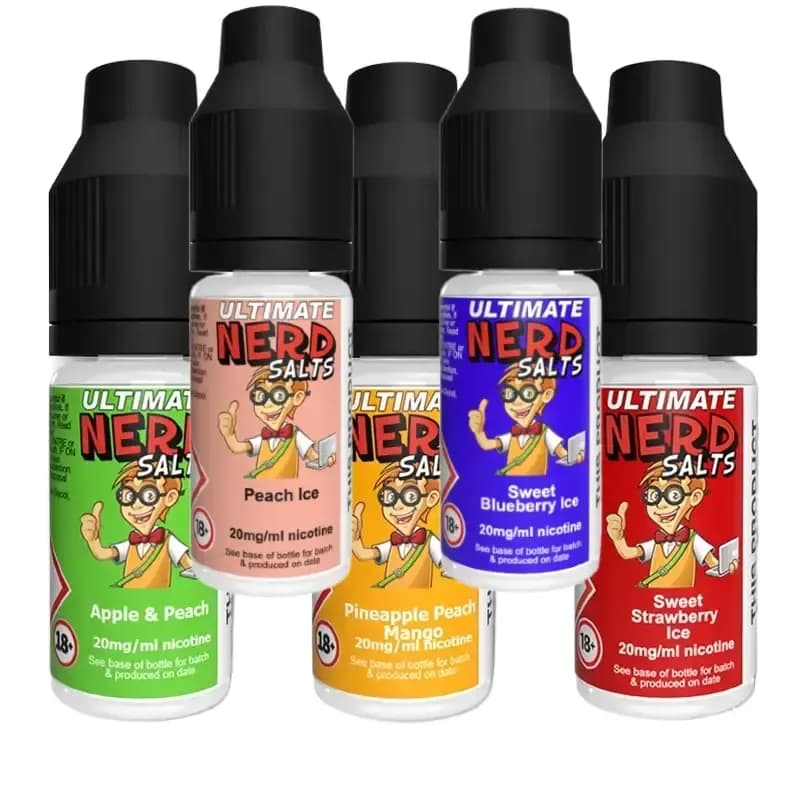
Ultimate Nerd Salts: The Full 51-Flavour List and Definitive Picks
Explore the 51-flavour roster of Ultimate Nerd Salts. From icy fruits to candy classics, discover the best picks and...

Ultimate V2 E-Liquid: All 41 Flavours
All 41 Ultimate V2 flavours in one place - freebase strengths from 0mg to 18mg, the right PG/VG at each strength...